


Page 20 - FDMAsia JanFeb 2025
P. 20
18    FOCUS                                                                        JAN/FEB 2025 FDM ASIA | www.fdmasia.com


          MAPPING THREE DECADES OF CHANGE IN


          TROPICAL TIMBER


          A new ITTO study charts how economic shocks, demographic trends, and the rise of plantations
          have transformed the sector. By Frances Maplesden


            n the past three decades, world production, consumption   The report is an essential contribution to the creation
            and trade in tropical wood products has undergone   of transparency in timber markets. As such, it is a valuable
          Isignificant change: the availability and quality of tropical   resource for decisionmakers in both the public and private
          timber from natural forests has become increasingly restricted;   sectors as they seek to understand and shape a sector
          and economic and demographic changes have shifted the   that is central to the Sustainable Development Goals,
          location and growth of tropical wood product industries—  from ending  of  poverty to stemming the  climate and

          and the geographic location of demand—from developed to   biodiversity crises.
          developing countries.                                 This article presents some of the report’s major findings,
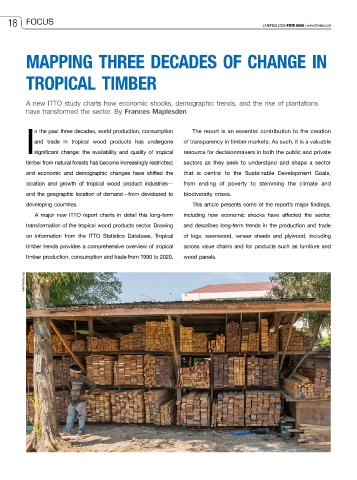
            A  major  new  ITTO  report  charts  in  detail  this  long-term   including how economic shocks have affected the sector,
          transformation of the tropical wood products sector. Drawing   and describes long-term trends in the production and trade
          on information from the ITTO Statistics Database, Tropical   of logs, sawnwood, veneer sheets and plywood, including
          timber trends provides a comprehensive overview of tropical   across value chains and for products such as furniture and
          timber production, consumption and trade from 1990 to 2020.  wood panels.


         wikimedia.org

