

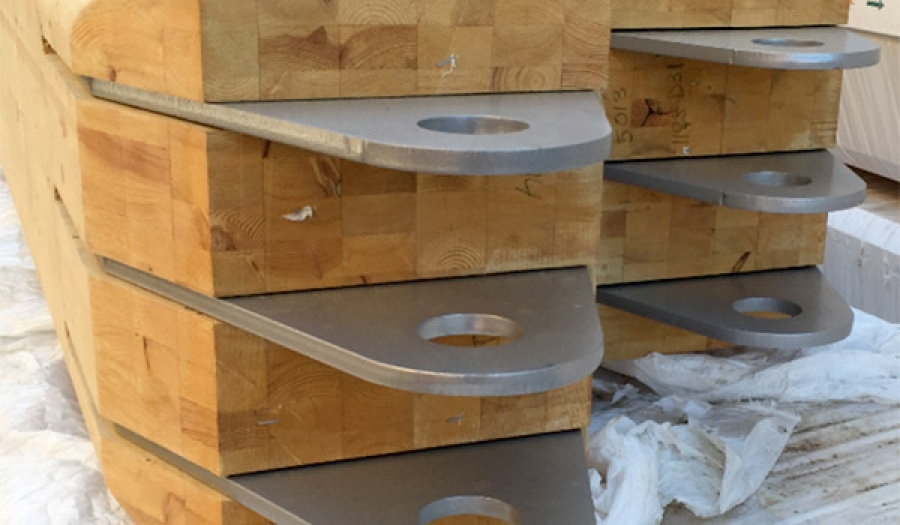
The Japan Glued Laminated Timber (Glulam) Market is a vital segment within the country’s engineered wood industry, driven by the rising demand for sustainable and high-performance construction materials. Glued Laminated Timber (Glulam) refers to a structural wood product manufactured by bonding multiple layers of dimensioned timber with durable adhesives, offering superior strength, stability, and design flexibility compared to traditional lumber.
The Japan Glulam market is experiencing steady growth, fuelled by increasing adoption in residential, commercial, and infrastructure projects due to its environmental advantages, earthquake-resistant properties, and enhanced load-bearing capacity.
The Japanese government’s commitment to promoting wooden construction, particularly in public buildings, aligns with the broader trend of reducing carbon footprints and enhancing urban sustainability.
Additionally, the demand for Glulam is supported by stringent building regulations emphasising earthquake resilience, as Glulam structures offer high strength-to-weight ratios and flexibility, making them suitable for seismic-prone areas.
Furthermore, rising urbanisation and the shift towards prefabricated and modular construction methods are augmenting the demand for engineered wood solutions, including Glulam. Key growth opportunities exist in the increasing preference for eco-friendly building materials, government incentives for timber-based construction, and the expansion of cross-laminated timber (CLT) applications.
However, challenges such as raw material price fluctuations and competition from alternative construction materials remain factors to monitor.
Overall, supported by evolving construction practices, sustainability initiatives, and the need for resilient building materials in a region prone to natural disasters, Japan’s Glued Laminated Timber market is poised for sustained growth.sad
